Sinus Lift Procedure: How It Changes Your Upper Jaw for Implant Placement
 Dental implants have been gaining popularity nowadays due to their significant functional and esthetic restoration of lost teeth. Nevertheless, it is necessary that the amount and quality of bone tissue in the patient’s jawbone be satisfactory. For some people, there is an insufficiency of bone tissue in the area of the maxillary sinus for implantation. Fortunately, there is a surgical technique, known as the sinus lift, that can help in this situation.
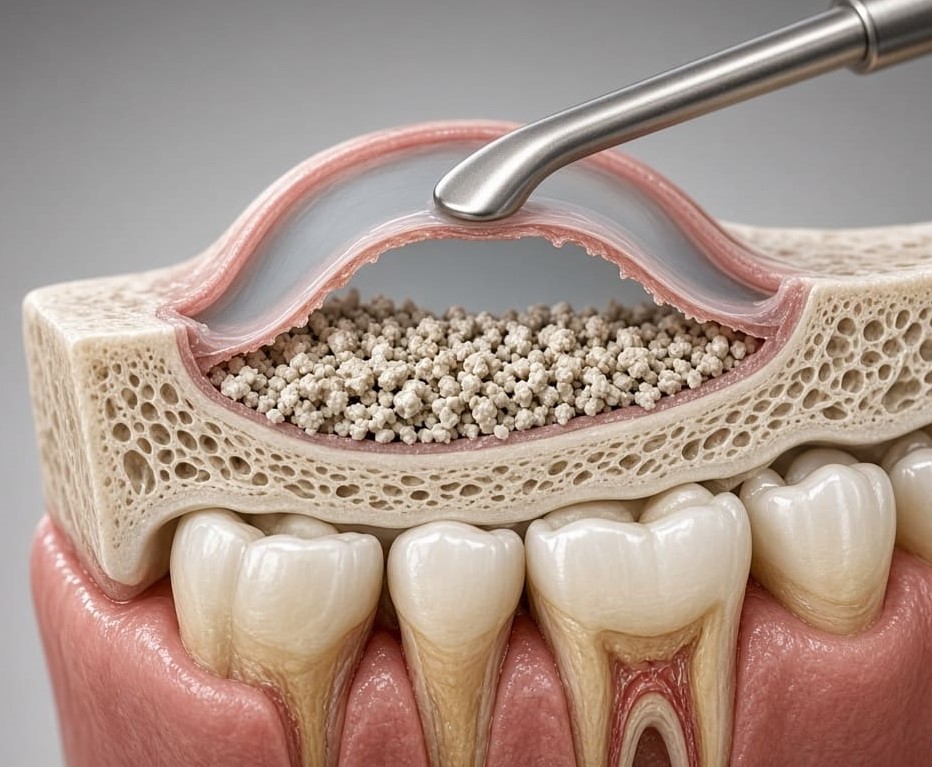
The sinus lift procedure, also known as sinus augmentation, involves the elevation of the maxillary sinus membrane and the placement of the bone graft into the area to increase the height of the upper jaw. This procedure is performed when there is not enough bone tissue in the area of the maxillary sinus. The reasons for this may vary; for instance, tooth loss in the upper jaw. As a result of the procedure, the dentist will be able to place dental implants in the formerly impossible region and reconstruct your oral functions and esthetic appearance. Therefore, the procedure is a good solution for bone loss in the upper jaw and should be taken into account by patients who need it.
Definition of Sinus Lift Surgery
Sinus lift surgery is one of the types of bone graft surgeries. The operation is performed in the upper jaw, more precisely, in an area of the upper premolars and molars. The maxillary sinuses are located in the upper jaw above them; sinus lift creates a gap between them and the jawbone.
Such an intervention is required when there is not enough space left for placing the selected dental implant in the upper jaw due to natural bone loss. Meanwhile, in the maxillary sinuses, it is possible to lift the membrane and fill the created gap with graft material.
Graft material for such an intervention can be received from the patient during the surgery itself. However, there are other sources of graft material, which are selected depending on the doctor’s case and the patient. New bone tissue will form, making it possible to install a dental implant in the upper jaw.
In which cases is it necessary to perform a sinus lift before the installation of dental implants?
Several factors may indicate that one needs to perform a sinus lift procedure. The absence of bone tissue in the upper jaw is one of those factors. It occurs quite often when placing dental implants due to tooth loss and its impact on jaw size.
The effects vary depending on each patient and on the extent of the protrusion of the maxillary sinus. In some cases, the sinus is too wide, and the upper jaw is not large enough for the placement of a dental implant. In addition, it is possible to face a genetically conditioned shallow maxillary sinus. Different oral conditions and illnesses may affect the state and the size of bone tissue.
The necessity to perform a sinus lift is connected to the lack of bone tissue and space for a dental implant.
What is the principle of sinus lift surgery?
At the same time, the sinus lift procedure can also be regarded as a periodontal procedure. First of all, the dentist must examine the patient’s gums, teeth, and jawbones. For this purpose, panoramic radiographs and cone-beam computer tomography will be used for the examination of the sinus cavity, the alveolar ridge thickness, and the bone grafts amount.
Then, the dentist anesthetizes the patient. The type of anesthesia depends on the complexity of the operation and the individual patient’s requirements. Usually, only local anesthesia is needed for such surgery. The dentist makes an incision to gain access to the maxillary sinus, lifts its membrane, and grafts the bone tissue. The incision is stitched up, and the recovery process begins. If there is enough bone tissue for implants, the dentist will be able to place them into the bone immediately. In some cases, the grafted bone needs some time to recover before the next procedure takes place.
Upon completion of the procedure, the dentist will tell the patient about the correct aftercare procedure and medications.
How is the recovery after the operation?
Depending on a number of factors, including how difficult the operation itself was as well as the health state of the patient, the recovery time will differ. There might be some discomfort, bruising, and swelling in the first few days after the procedure. Following the doctor’s instructions, patients will be able to facilitate their own recovery process.
The surgical area should not bear too much pressure. Thus, while recovering, the patient should avoid blowing his/her nose, sneezing, smoking, and exercising. The medicine prescribed by the dentist after the procedure should be taken according to the doctor’s instructions.
The healing of the tissue will depend on the success of the grafting process. At the same time, the patient can take care of the surgical area independently dthe control of the dentist. Once the healing process is completed, the specialist will examine the grafting and make decisions about the placement of the implants.
Sinus Lift Advantages
The sinus lift is a type of surgery used when people have atrophy of their alveolar ridges, which means low-quality bone. The most significant advantage of this surgery is the possibility of using dental implants irrespective of patients’ ages.
Given that all procedures for the sinus lift operation are done considering the needs of the patients, the bone would be reconstructed in such a way that implants would work normally. Also, due to the sinus lift operation, one more possibility would appear for tooth extraction and tissue grafting. Thus, with implants and sinus lift operation, indications for the implantation operation would increase, and people would have the possibility to get their teeth restored. Nevertheless, there are several things that need to be considered prior to the implementation of the procedure. They concern the health status of the patient, healing of the sinuses, abilities of the dentist, and implant quality.
Sinus Lift: Is it Necessary for You?
To make up your mind whether you should undergo a sinus lift, you need to realize that there is no need to do any augmentative surgery if you want to place implants. Your indication to have your teeth implanted, the condition of the bones you already have, and anatomical specifics will decide whether you should do a sinus lift.
It is your task to maintain the results of the surgery by maintaining proper oral hygiene while the bone graft is being absorbed. Proper maintenance presupposes twice-a-day tooth brushing, interdental brushing, special hygiene procedures, and frequent visits to the clinic. In addition, any kind of trauma to the surgical area is forbidden; thus, you shouldn’t smoke or damage your mucous membrane mechanically. The sinus lift procedure is a very effective method of inserting artificial teeth where the alveolar bone is not of adequate quality. You will learn all the necessary details about your eligibility for such surgery in the Sinus Augmentation consultation. Preparations for surgery and proper care of the surgical site will contribute to a faster recovery process.
Frequently Asked Questions
Is sinus lift surgery painful?
There is no pain involved in sinus lift surgery because it is an outpatient surgery done under local anaesthesia. Nonetheless, once the effect of anaesthesia wears off, there may be some pain and swelling. All of these problems can be solved with the help of your dentist’s instructions.
How long does recovery after sinus lift take?
The first period of recovery takes 7-14 days. The total period of recovery will vary depending on how your body reacts and the method of grafting.
Is it possible to place dental implants right after the sinus lift?
If there is enough bone tissue, then it is possible to place implants during one surgery, but otherwise, the healing period for the sinus lift is needed.
Who is capable of conducting a sinus lift surgery?
Sinus lifts can be conducted by a general dentist, periodontist, or oral surgeon, depending on the needs of the individual patient.


 |