Black Line Around Your Crown: Is It Normal or a Warning Sign?
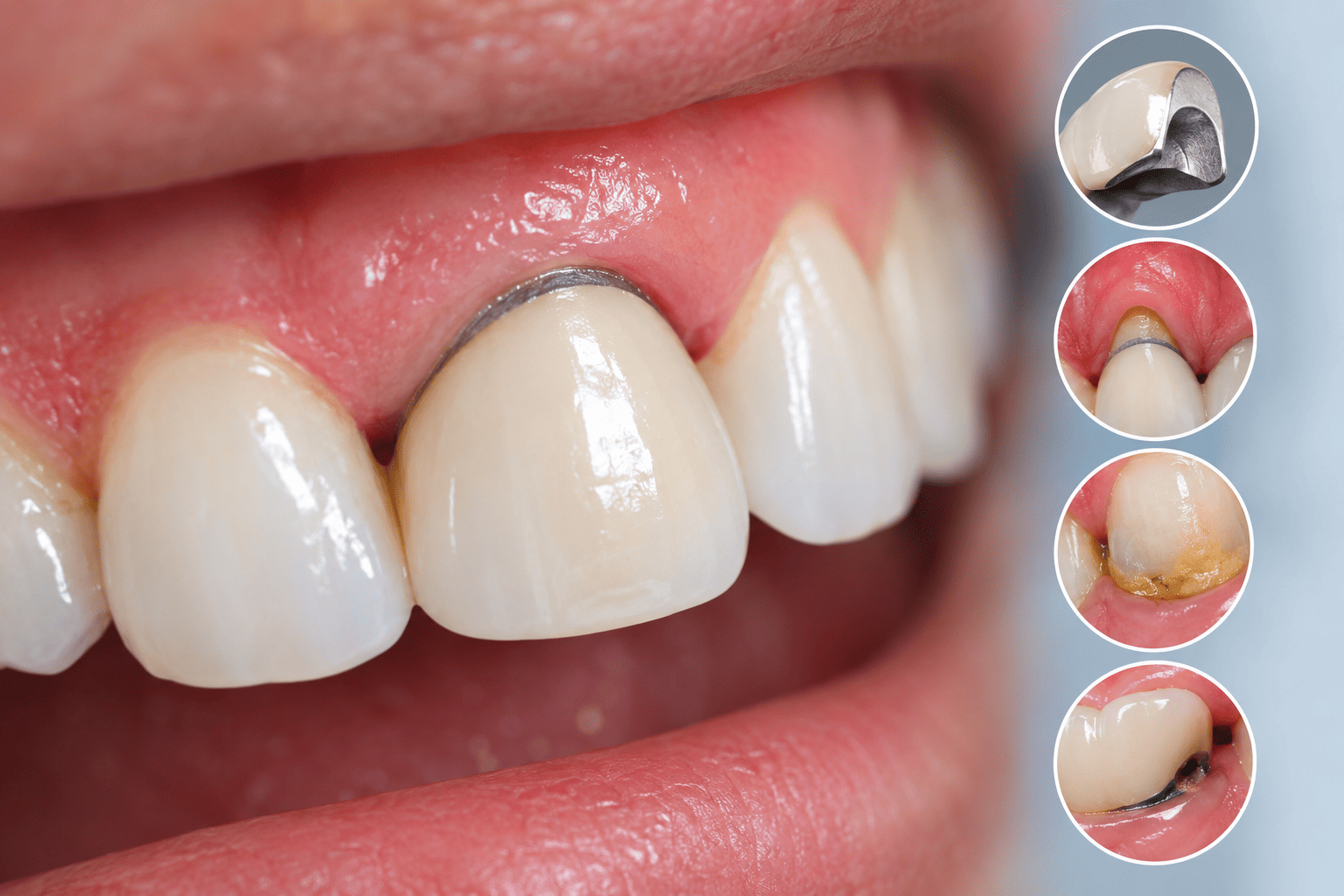
The purpose of dental crowns is to restore a damaged tooth and give it a natural look. Over time, you may see a small black line appear around your crown at the place where the crown comes into contact with the gum tissue. This may alarm you, since a crown may appear fine for years before the dark line appears. The presence of a black line is neither necessarily dangerous nor a sign of a problem that must be addressed immediately. There are some possible causes, including the type of crown and the condition of the tooth underneath.
Why Do Crowns Develop Black Lines Around Them?
One of the frequent causes of a black line on a crown is related to its structure. Crowns manufactured earlier have a metal base under the porcelain layer. Due to natural movements of the gums, this darker layer becomes exposed around the gum line. This does not indicate any problems with the crown itself. At the same time, a darker spot may be caused by plaque buildup, gum irritation, decay in the teeth surrounding the crown, or other processes within the tooth beneath the crown.
When Would a Dark Crown Margin Be Less of a Problem?
If the crown functions well and there is no pain, swelling, bleeding, or sensitivity, and the dark line has always been there, the color may not reflect a dental condition but rather the crown material itself. Old porcelain-fused-metal crowns are prone to forming a dark margin after gum recession. However, appearance is not everything. Regular dental checkups will help find out whether the neighboring tissues remain healthy.
Is It Possible That the Gum Recession Caused the Black Line?
The reasons why gums might be receding include aging, brushing one’s teeth too aggressively, having issues with one’s periodontals, or even being genetically predisposed to it. With gum recession, the gum line goes down, thus exposing a part of the dental crown that was not supposed to be visible before. In some cases, it can lead to the black/grey line appearing. One cannot ignore gum recession, especially when it is combined with bleeding, tenderness, exposed teeth, and sensitivity
Does It Signify Decaying Under the Crown?
Sometimes there may be a dark line due to decay near the margin of a crown. Crowns shield your teeth, yet they do not prevent the occurrence of decay in your teeth. The tooth will be exposed at the margins of the crowns, and plaque may accumulate at such margins if oral hygiene is poor. If there is any decay occurring at the margins of the crown, early detection is critical since the type of treatment needed will depend on the severity of the decay. Sensitivity, pain while biting, foul taste, and food getting trapped at the margin of the crown are some of the signs that you should visit a dentist.
Selecting the Correct Dental Treatment
In case of any changes occurring near a crown, having an evaluation performed can help ease your mind and avoid any needless anxiety. A reliable dentist in the colony will be able to check your crown, your gums, and your tooth to identify the cause of the dark line that you have noted. This depends on the findings, but the dentist may suggest monitoring the situation, improving your oral health, treating gingivitis, fixing your tooth, or even replacing your crown.
What Takes Place in the Examination of the Crown?
The examination of teeth will usually involve an examination of the margin of the crown, the gum area around it, any presence of tooth decay or structural issues in the tooth, and dental X-rays, depending on the need. The dentist will inquire whether there is sensitivity to cold and hot foods or beverages, pain, any change in the crown, and difficulty in chewing. The examination enables one to differentiate between a normal and problematic crown that needs repair.
The Modern Crowns Will Look More Natural
There have been many developments in dental science, which means that nowadays modern crowns are made of materials that can resemble natural teeth. Based on the location of the tooth in question, as well as the needs of each particular patient, different materials like all-ceramic crowns or zirconia crowns can be used. Which type is more appropriate will depend on the forces your teeth encounter, the position of the teeth in question, the remaining structure of the teeth, etc.
The Role of Crowns and Bridges in Restorative Dentistry
Crowns and bridges are frequently used for restoration of damaged or lost teeth, although both procedures have different uses. A crown is a tooth cover that protects the existing tooth, whereas the bridge helps fill the gap created by a missing tooth by connecting it with surrounding teeth. Good planning, proper fitting, healthy gums, and regular maintenance at home ensure the longevity of both crowns and bridges. If you need replacement of your old restorative procedure or have any issues related to its aesthetics, consult your dental professional regarding your treatment options.
When Should One Visit a Dentist?
A black line warrants more consideration if it occurs abruptly or is seen along with any other symptoms such as bleeding gums, swelling, halitosis, pain, sensitivity, looseness of the crown, or difficulty in chewing. Even without any other signs, a visible difference in the crown that is already old deserves some mention at your next dental appointment. When you need a dentist in Lewisville, choosing one who takes the time to examine the crown properly and discuss its condition with you can make the process much more pleasant. The main purpose is not just making the crown look better but keeping it healthy.
Frequently Asked Questions
1. Is a black line around a crown on teeth normal?
It is normal to have a black line around a crown on a tooth, particularly with porcelain fused to metal. However, other things like gum recession or decay can make the area around the crown discolored.
2. Can gum recession cause a black line on a tooth crown?
Yes. Gum recession exposes the dark metal line of some crowns, and that makes a black or gray line appear on the tooth.
3. Is a black line around a tooth crown a sign of decay?
Not always. The black margin may not be due to decay; it could be because of crown materials. But you can consult a dentist.
4. When should I visit a dentist for a black crown line?
Visit a dentist when you notice a new black line with pain, swelling, bleeding, sensitivity, halitosis, food impaction, or a loose crown.


 |
|